


From Check-In to Recovery: Surgery Need to Knows
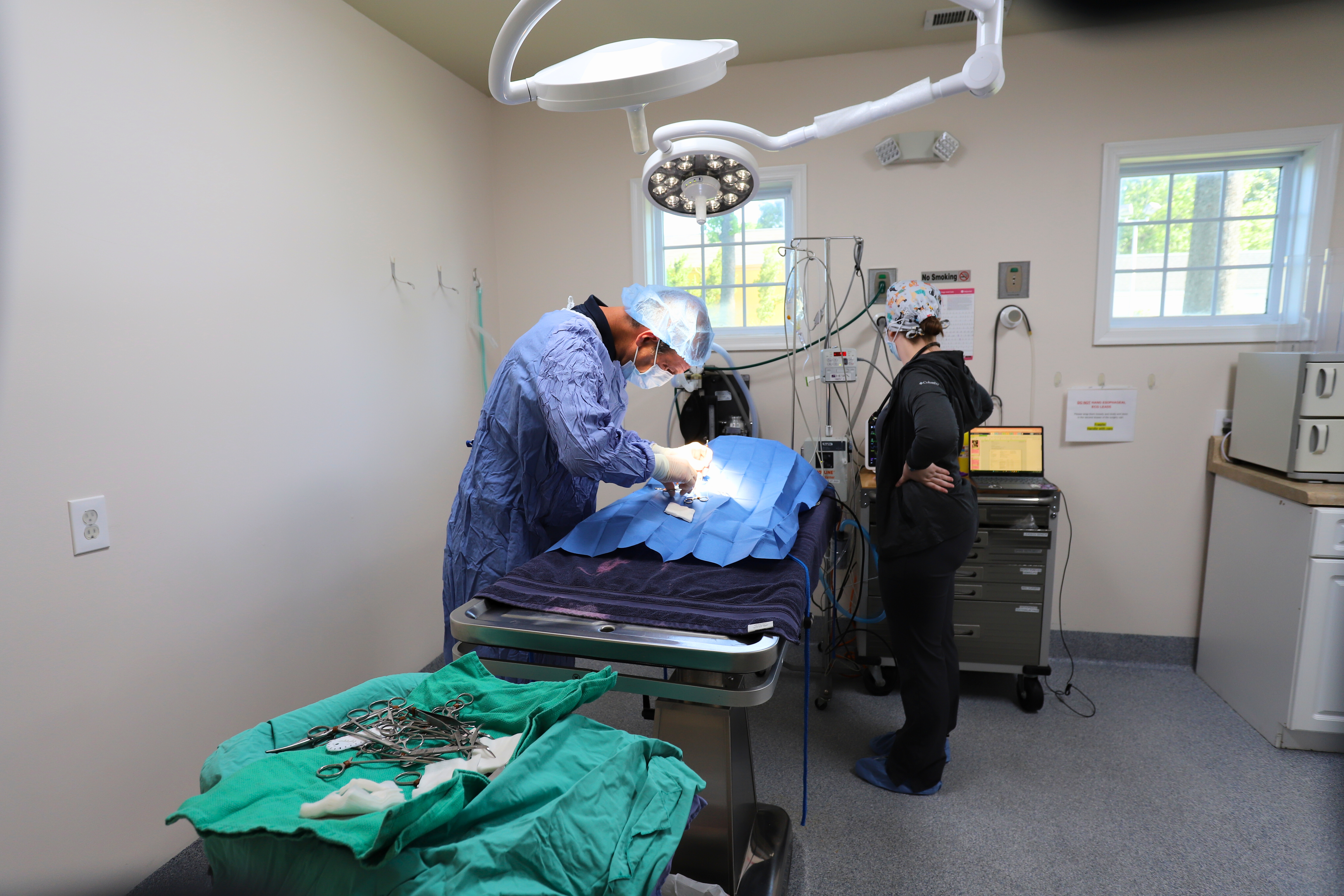
We know how nerve-wrecking it can be to send your fur baby into surgery and there’s so many questions running around in your head it can be hard to think of them in the moment. Our surgery technician put together a list of frequently asked surgery questions to help give you a piece of mind before, during, and after your pets surgery with us. If you do have any other questions about your pet’s upcoming surgery feel free to give us a call or send us an email and we’ll be happy to help!
What are the general pre-op instructions?
General Anesthesia often causes nausea, so we ask that your pet be fasted for 12 hours prior to surgery. Therefore, you may feed your pet their normal dinner the night before surgery, but they should not receive any more food after 8:00pm. We also recommend restricting access to water after midnight. If your pet is on any daily medications, please call our office for further instruction on whether or not it is recommended to temporarily stop their medications prior to surgery.
What is the timeframe I should expect on surgery day?
Surgery drop off is between 8:00-8:15am. One of our receptionists will escort you and your pet into an exam room where you will meet with one of our surgical assistants to review paperwork and answer a few questions. We often have several patients being dropped off at the same time, so our surgical assistant will go through this intake with each client to ensure a smooth surgery day ahead. Procedures are usually finished by 2:00pm and pick up is usually between 2:30pm-5:00pm.
When will the doctor talk to me about my pet’s surgery?
The surgeon for the day will determine what order each procedure will be performed, so surgery times may vary. If your pet is having a dental prophylaxis, they will likely be the last in line as these procedures can oftentimes be time consuming and tedious. Once your pet’s surgery has been completed, the surgeon will give you a call to let you know how the procedure went and give you a rough time frame for pick up. Most pick up times will be between 2:30pm-5:00pm. If you are unable to arrive for pick up at the specified time, please let our team know when we can expect you. Our operating hours on Tuesdays and Thursdays extend to 7:00pm for a later pick up if needed.
Why can’t my pet eat the morning of surgery?
Fasting prior to surgery is important because for some pets, having food or water in the system can interfere with the intubation, or breathing tube, used to deliver anesthesia. Fasting can help avoid potentially life-threatening aspiration pneumonia, which can happen when gastrointestinal contents have been inhaled into your pet’s lungs. This results in a secondary inflammation and infection of the lung. Due to this inflammation, excessive fluid and mucus accumulate within the lower airway, causing difficulty breathing. However, there are some exceptions to this rule, such as exotic pets undergoing anesthesia. Always listen to the discretion of your doctor.
Will my pet be left alone during, before, or after surgery?
Your pet is monitored very closely before, during, and after surgery by our surgical team. During recovery their vitals are checked every 20 minutes to ensure smooth recovery and stability of your pets body temperature. Once awake enough, dogs are taken outside to use the bathroom and have their IV catheter removed. Our entire staff is always on alert and checking on your pet throughout their time in the hospital and giving them lots of love!
How long will my pet take to wake up from anesthesia?
With today's medications and anesthetics, many of which are reversible, your pet should be coherent and walking by the time they are discharged to you in the afternoon. Many pets are sleepy or groggy for 12 to 24 hours after anesthesia. After 24 hours post-op, your pet should be nearly back to their normal selves!
How do I care for my pet after surgery?
After surgery, your surgical technician will print out a list of instructions on how to take care of your pet after their specific surgery. However, for general purposes we recommend keeping their incision(s) clean and dry for at least two weeks. We will often send home either a medical shirt (a onesie for dogs!) or an e-collar (cone of shame) to wear for a certain period of time or until their sutures/staples are removed. We ask that you check the incision at least once daily, looking for any excessive swelling, redness, or discharge. It is important to keep your pet from licking or chewing their incision, as they are likely to get their sutures out pre-maturely which will delay the healing process and could cause infection. It is also important to keep your pet calm and restrict their activity level for at least 2 weeks while healing.
How long do they have to wear the medical shirt or e-collar?
Your pet should wear their medical shirt or e-collar for at least 7-10 days if they do not have sutures to be removed. If they need to come back for suture removal, they should wear it until those sutures are removed by our team. These devices are VERY important to keep your pet from chewing out their sutures and opening their incision, which can lead to infection. We want your pet to heal up as soon as possible!
Will my pet be in pain after surgery?
Any pet undergoing surgery will likely have at least some level of post-operative pain, just like humans do. Depending on the intensity of the surgery, their pain could be more severe. Your doctor will prescribe your pet an appropriate regimen of pain medications to take for several days after surgery. It is important to follow the directions of your doctor to control post-op pain as much as possible. If needed, the doctor may also prescribe medications to help keep your high-energy pet calm at home while recovering.
How long do I have to wait to have my pet bathed or groomed after surgery?
It is recommended to wait at least 2 weeks after surgery before giving your pet a bath or having them groomed. It is important to allow proper time for their incision to heal before getting it wet, otherwise the incision could become infected. If your pet has sutures or staples, those should be removed prior to any bathing or grooming.
Quick Links

New Patient
Online Form
Keep
In Touch

Navigation
Contact Info
Office Hours
Monday: 8:00 am - 5:00 pm
Tuesday: 8:00 am - 7:00 pm
Wednesday: 8:00 am - 5:00 pm
Thursday: 10:00 am - 7:00 pm
Friday: 8:00 am - 5:00 pm
Saturday: 8:00 am - 12:00 pm
Sunday: Closed
